A Secret Hidden in the Walls
I’ve been investigating the Merchant’s House Museum for nearly twenty years, and one of the things I’ve learned about this place is that just when you think you know the house, it gives you something else.
And this one is extraordinary.
Sitting quietly on East Fourth Street in Manhattan, the Merchant’s House is one of those rare places where you can walk through the front door and, with a little imagination, leave modern New York behind.
The house was built in 1832 and became home to the Treadwell family in 1835. Members of the family would remain there for nearly a century, until 1933. When the house opened as a museum three years later, much of what the Treadwells had lived with was still there.
And I mean still there.
The furniture. The paintings. The piano. The beds. The dishes. The clothing.
This isn’t a recreation of a 19th-century New York home.
It is one.
That alone makes the Merchant’s House remarkable. But apparently, after almost two hundred years, the old girl was still keeping secrets.
Something Behind the Drawers
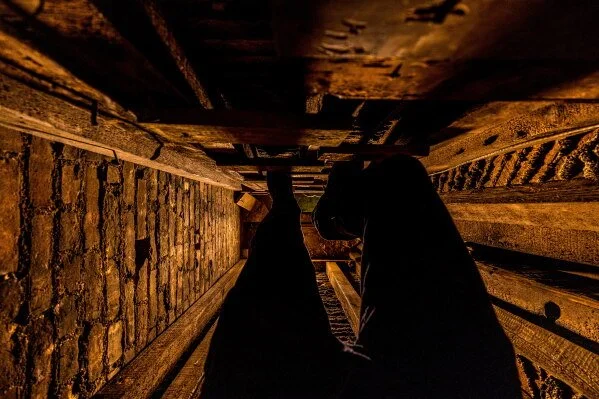
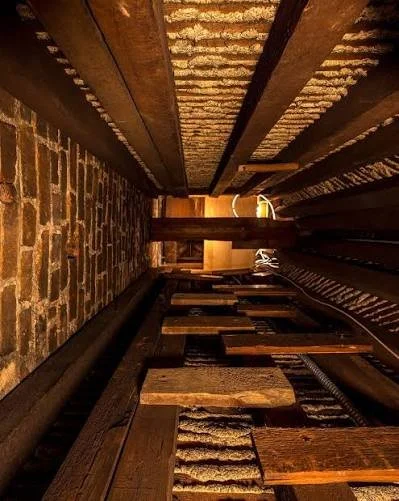
Hidden within the house is a narrow vertical passageway that runs inside the west wall.
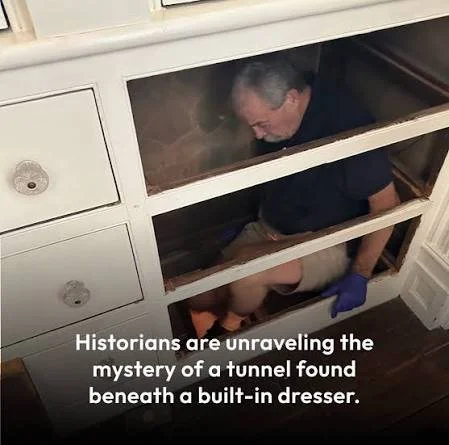
There have been rumors for decades that there was something unusual there, but recent investigation by architects, historians and preservation experts revealed just how unusual it may be.
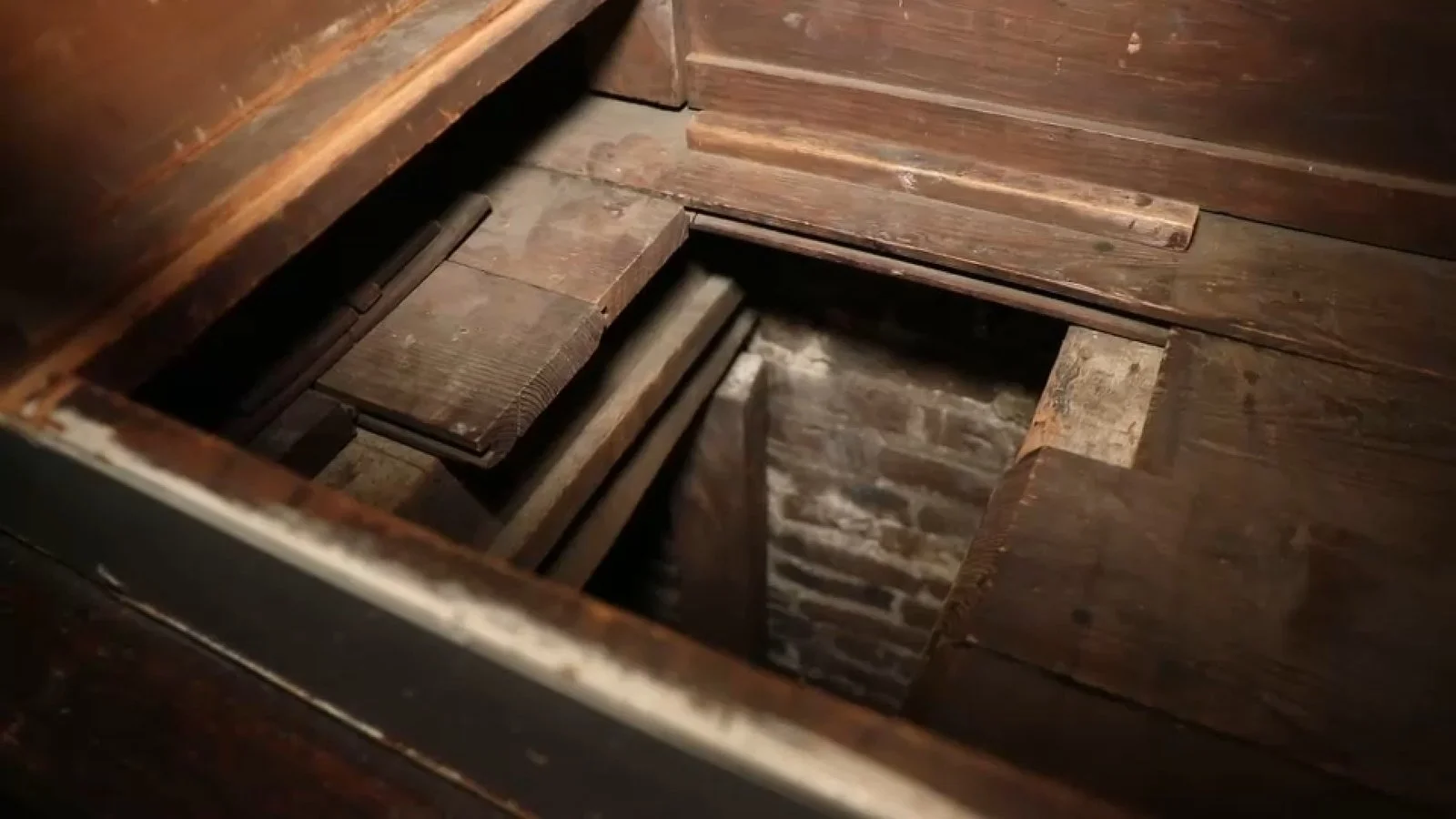
Remove a heavy bottom drawer from a built-in cabinet on the second floor and an opening appears in the floorboards. Below it is an enclosed space, roughly two feet by two feet, containing a ladder leading toward the ground floor.
From inside the rooms, you would never know it was there.
Which, of course, may have been exactly the point.
Experts studying the passage believe its design is consistent with deliberate concealment and may have provided a hiding place or escape route connected to New York’s Underground Railroad.
The possibility becomes even more intriguing when you look at the man who built the house.
Joseph Brewster
The Merchant’s House was constructed by Joseph Brewster, a wealthy New York hatter who was also associated with the abolitionist movement.
That matters.
In the New York of the 1830s, openly opposing slavery, particularly among wealthy white businessmen, was hardly an insignificant position to take. The city had deep economic ties to the Southern slave economy, and abolitionists could face hostility and even violence for their beliefs.
Brewster had both the means and the opportunity to incorporate something unusual into the design of his home.
Was the concealed passage intentionally built to hide people escaping slavery?
That is the question historians are now trying to answer.
And I think the question is almost as fascinating as the discovery itself.
There is still a lot we don't know. Brewster sold the house to Seabury Tredwell in 1835, and there is currently no definitive evidence establishing whether the Tredwell family used the passage—or even knew it existed.
History doesn't always hand you a signed confession.
Sometimes it leaves you a hole beneath a drawer and asks you to figure out why somebody went to so much trouble to put it there.
Another Chapter in an Already Remarkable House
For generations, the Merchant’s House has been celebrated because it preserves something that has almost completely disappeared: the private domestic world of a prosperous 19th-century New York family.
It is also famous for something else.
The house has a reputation as one of New York City's most persistently haunted buildings.
I know that side of the Merchant’s House pretty well.
I've spent nearly twenty years investigating reported paranormal activity inside these rooms—long nights listening, recording, documenting and occasionally experiencing things that aren't easily explained. Some of the evidence I've collected there remains among the most interesting of my career.
But that's what makes this latest discovery so fascinating to me.
After all those years walking through this house, opening doors, climbing stairs and sitting quietly in darkened rooms waiting for something unusual to happen, there was another story sitting inside the walls the entire time.
Not paranormal.
Not legend.
A real, physical passageway hidden in plain sight for nearly two centuries.
Whether future research proves that it was part of the Underground Railroad remains to be seen. If it does, the Merchant’s House will take its place in yet another extraordinary chapter of New York history.
And if you know this house, somehow that seems appropriate.
The Merchant’s House has never been very good at giving up its secrets all at once.